

So You Want to Start a Private Practice? Now What?
From “I think I could do this on my own” to LLCs, EINs, insurance panels, EMRs, and the surprisingly complicated business of becoming your own boss.

Behavioral Health Staff Turnover: What It Costs—and What It Is Actually Telling You
Recruitment is your first retention strategy. The resignation letter is usually the last data point in a much longer story.

Your Mission Statement Is Lovely. Now Show Me the Staffing Plan.
When behavioral-health organizations say “people first” but budget as though people are disposable
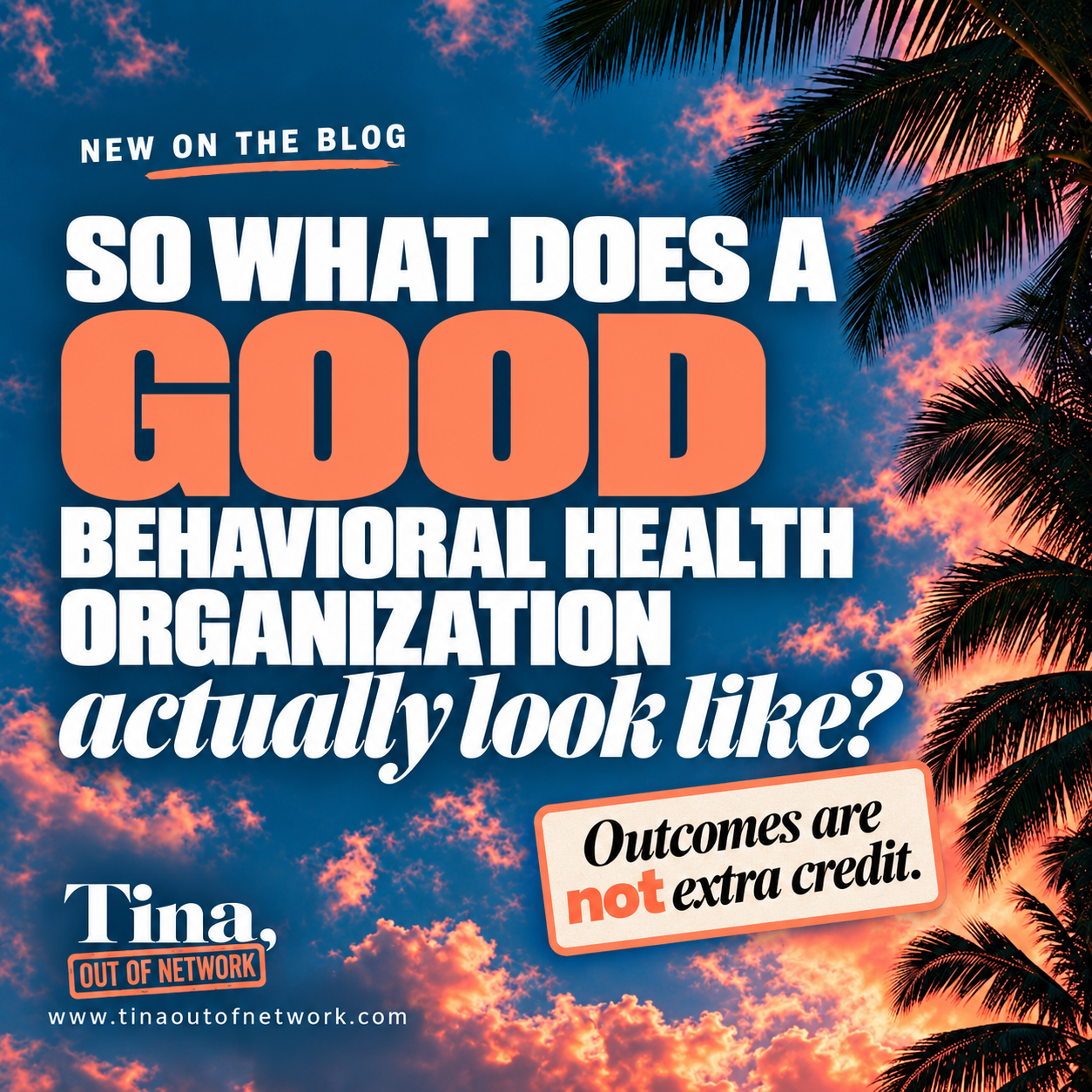
Good Programs Can Prove It.
What ethical behavioral-health organizations do differently—and why outcomes may be their strongest marketing strategy

When Insurance Decides You're Ready: Medical Necessity vs. Clinical Reality
On three weeks of sobriety, Thursday afternoon insurance denials, and the uncomfortable amount of influence a coverage decision can have over someone's treatment.
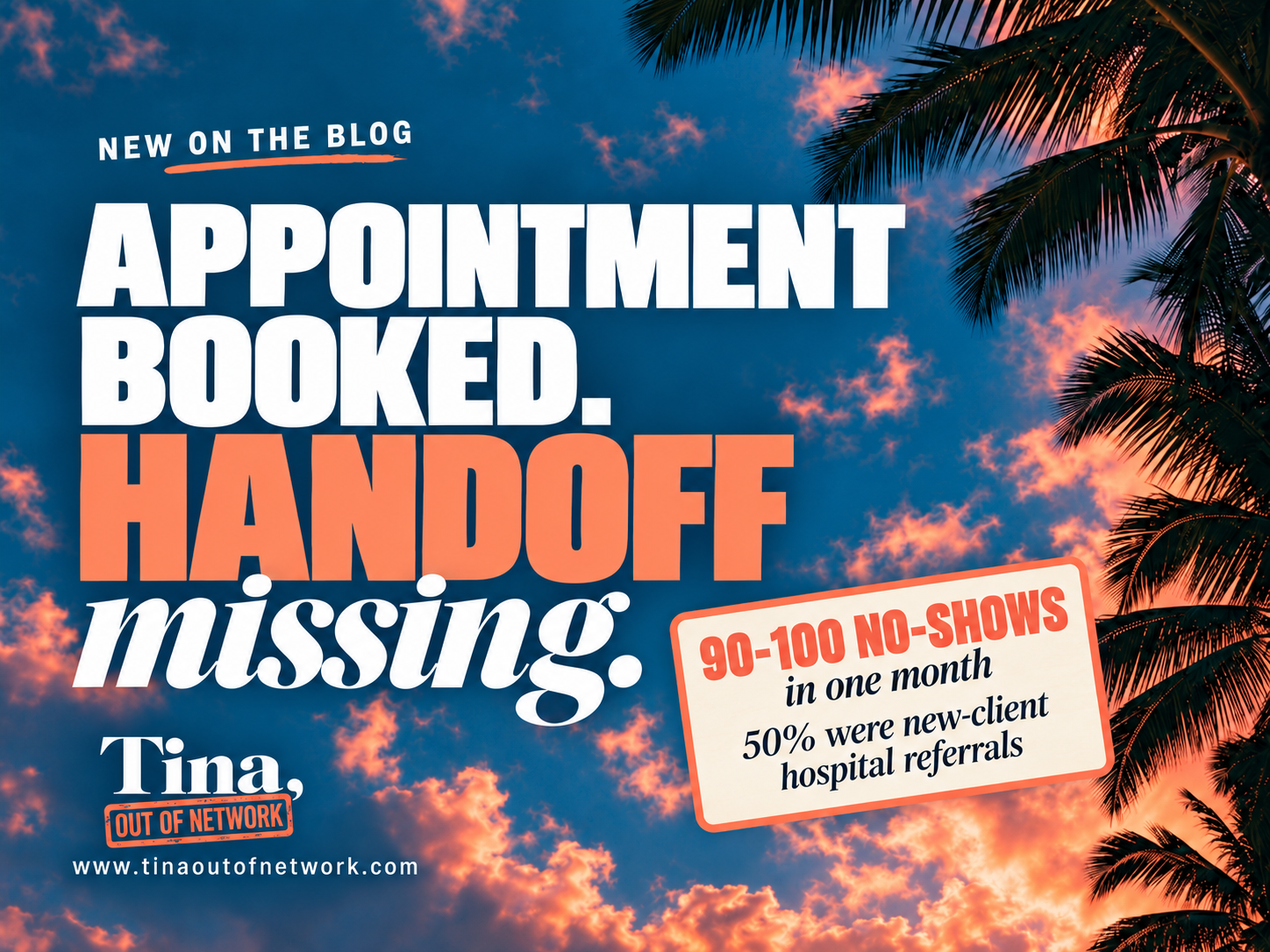
Why Hospital Referrals Become Behavioral Health No Shows
In one month, we recorded 90–100 no-shows across psychiatry and behavioral health. Half involved new clients referred by hospitals. What happens between scheduling care and actually receiving it? A closer look at the research, practical barriers, and the handoff hospitals and outpatient programs need to improve.
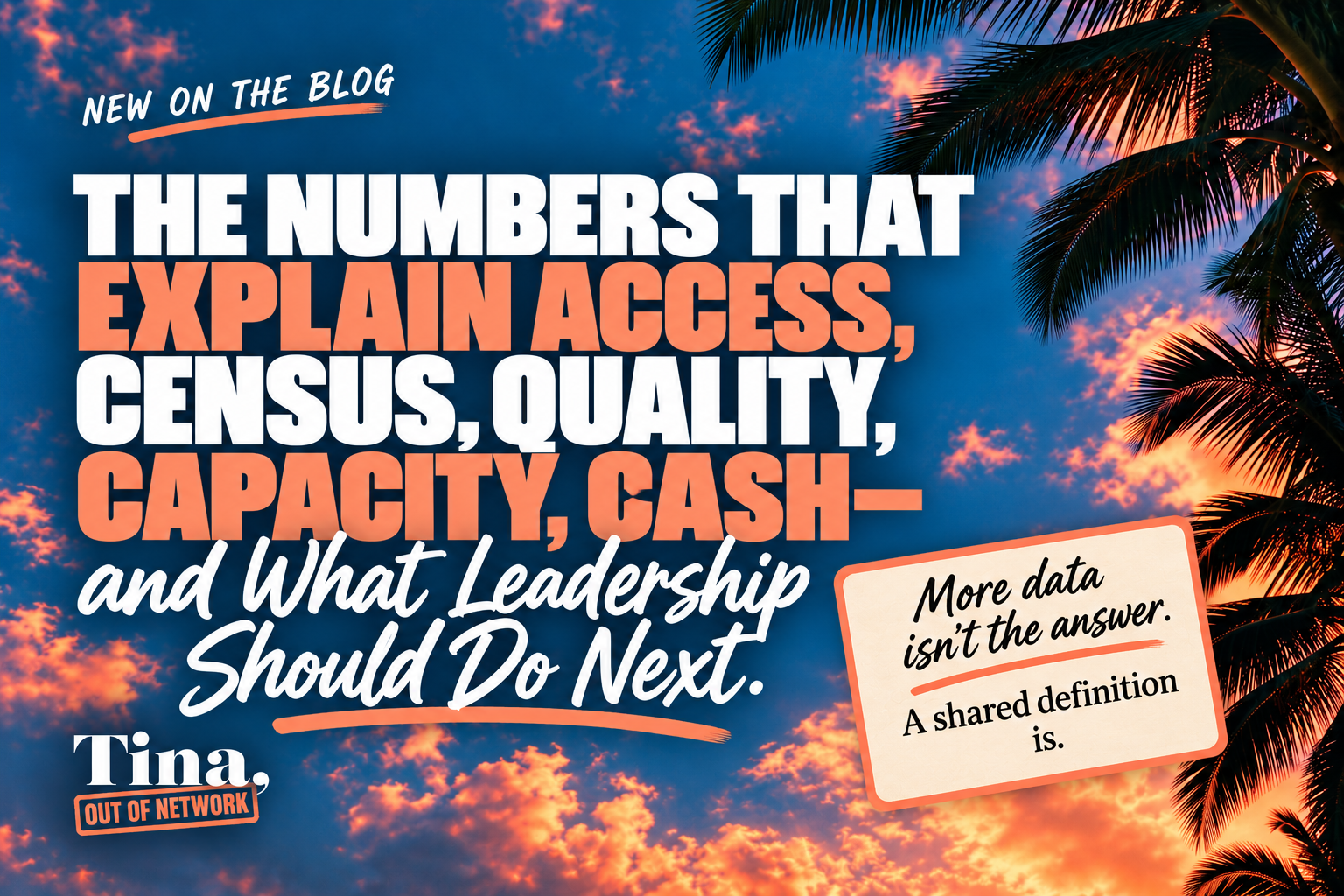
Behavioral Health KPIs: 21 Metrics Every Treatment Center Should Track
Your Dashboard Is Full. So Why Are We Still Guessing?

Where Did the Intimidating Woman Go?
I’ve been called direct, intimidating, difficult, and occasionally much less flattering things. Yet recently, I found myself wondering why the woman who can advocate fiercely for employees, clients, and organizations suddenly became so patient when the person she needed to advocate for was herself.
So I started looking at the psychology behind women, leadership, self-advocacy, and the strange double bind between being confident enough to lead and agreeable enough not to make anyone uncomfortable. Maybe being direct isn’t the same thing as having boundaries after all.
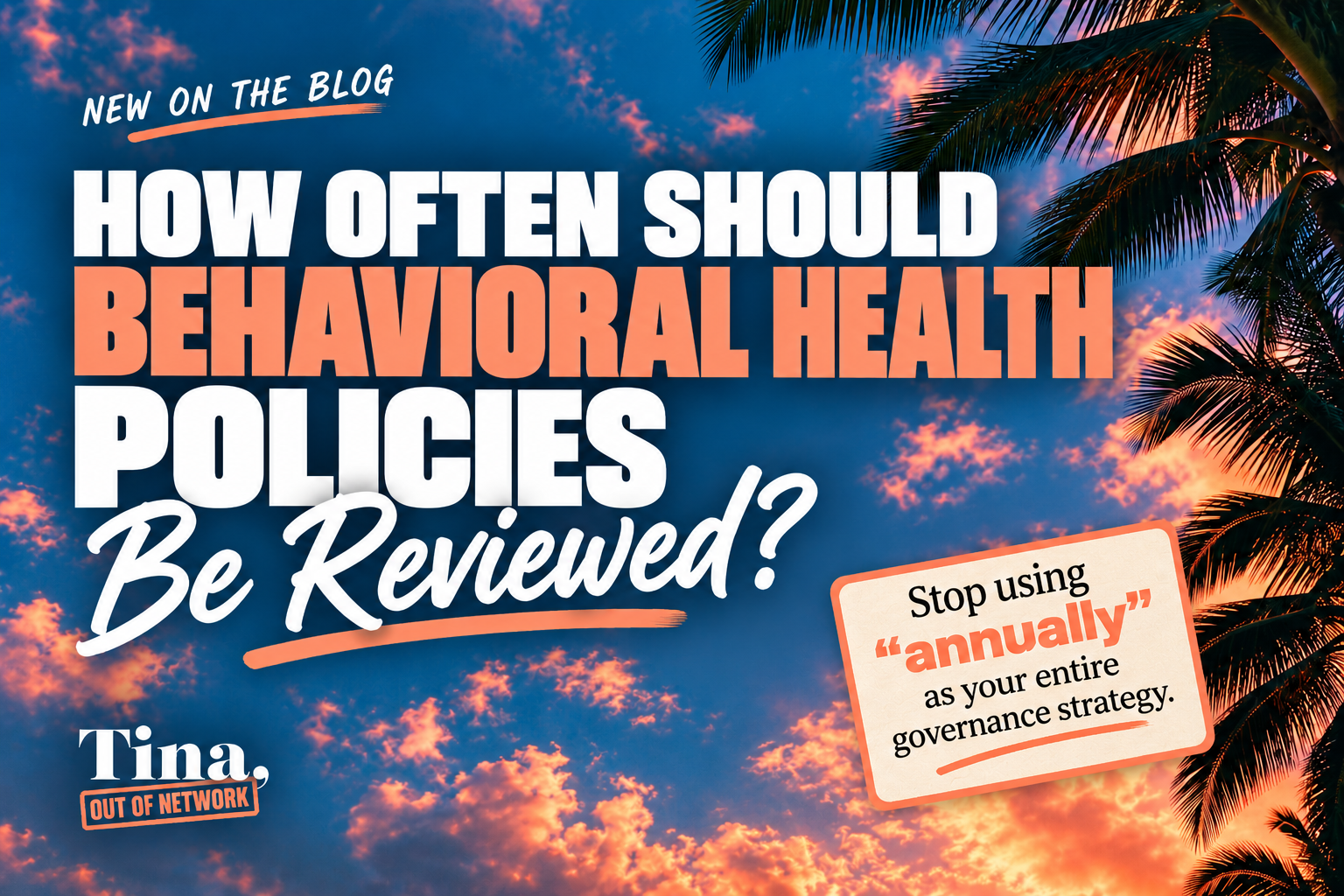
How Often Should Behavioral-Health Policies Be Reviewed?
Stop using “annually” as your entire governance strategy.

CAQH for Therapists: The Guide Grad School Forgot
CAQH is supposedly the streamlined part of insurance credentialing. That description was apparently written by someone who already knew their exact employment dates from 2014.

Ummmm… My Clinical Master’s Program Never Taught Me How to Do My Taxes—or Run a Private Practice
You Can Explain DBT. An EIN? Apparently That Was an Elective.
Your Census Problem May Not Be a Marketing Problem
Before spending another dollar trying to attract patients, maybe we should figure out what happened to the people who already asked for help.
Should Your Behavioral-Health Practice Go In-Network—Or Keep Its Sanity?
The actual benefits, costs, and operational consequences of accepting insurance
Therapist Utilization in Behavioral Health: How to Measure Capacity Without Manufacturing Burnout
A practical guide to booked, kept, and billable utilization—and the denominator that changes everything

When the Mission Stops at the Employee Door
Behavioral health organizations are built around care, safety, compassion, and trauma-informed practice. But those values lose credibility when the systems supporting employees fail to reflect the same principles.
This piece explores the gap between organizational mission and employee experience, and what happens when staffing pressure, rising client acuity, inadequate support, and leadership decisions begin to undermine the very values an organization claims to uphold.